- Location
- Granary District, SLC
- Slab type
- Elevated post-tension deck
- Areas scanned
- 3 anchor areas
- Report
- Delivered next day
Why post-tension slabs need a scan first
Post-tension cables are steel tendons stretched under enormous tension and locked into the slab. They are what let the slab span long distances with less concrete.
Nicking one with an anchor bit can cause serious trouble:
- A damaged tendon can lose tension or snap, which is a safety hazard for the crew below.
- The slab can lose strength where the cable was cut.
- Repairs mean an engineer, a specialty crew, and days or weeks of delay.
A 4-ton load raises the stakes. The anchors have to land in solid concrete, clear of the tendons with room around them, and in the right spots to carry the weight.
How we scanned it
Before anyone picked up a hammer drill, the GC brought in Ground Radar Techs. We scanned three anchor areas on the underside of the slab with ground-penetrating radar (GPR), which shows where steel sits inside the slab without drilling a single test hole.
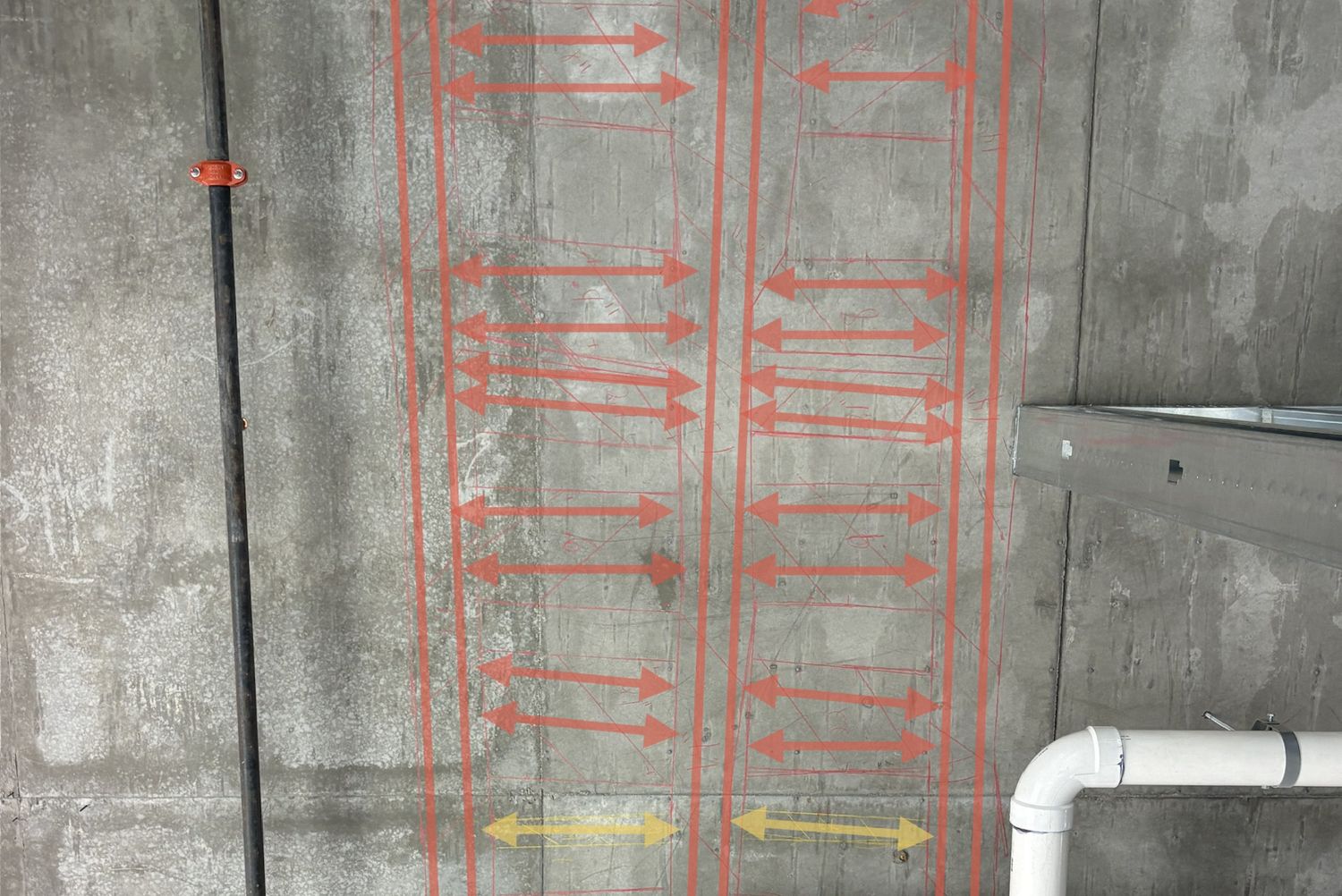
As the scan ran, we marked the layout right on the ceiling: where each tendon ran, where the rebar crossed, and where the clear zones were.
What we found
The slab was packed with post-tension tendons. They ran in both directions across all three scan areas, closely spaced, with rebar in between. In the photo, red marks the tendons and yellow marks the rebar.
Several of the planned anchor locations sat right on top of tendons. Had the crew drilled where they first planned, they would have hit PT cable. We flagged those spots, and the anchors were moved into the clear concrete between the tendons.
The result
The GC had the tendons and rebar marked on the ceiling before the drill crew started, and a written report the next day for their records. Anchor spots that would have hit a tendon were moved before anyone drilled, so the vat went up on anchors in clear concrete.
New to scanning? Read why every saw cut and core hole should be scanned first.
Common questions
Can GPR find post-tension cables from below the slab?
Yes. On this job we scanned from the underside of the slab, the same surface the anchors went into, and marked every tendon and the rebar directly on the concrete.
How fast can I get results?
We mark the layout on site while we scan, so your crew can work the same day. A written report follows; on this job it went out the next day.
Do I need a scan to anchor into a concrete ceiling?
If the slab is post-tensioned, or you don't know, yes. One missed tendon costs far more than a scan.